
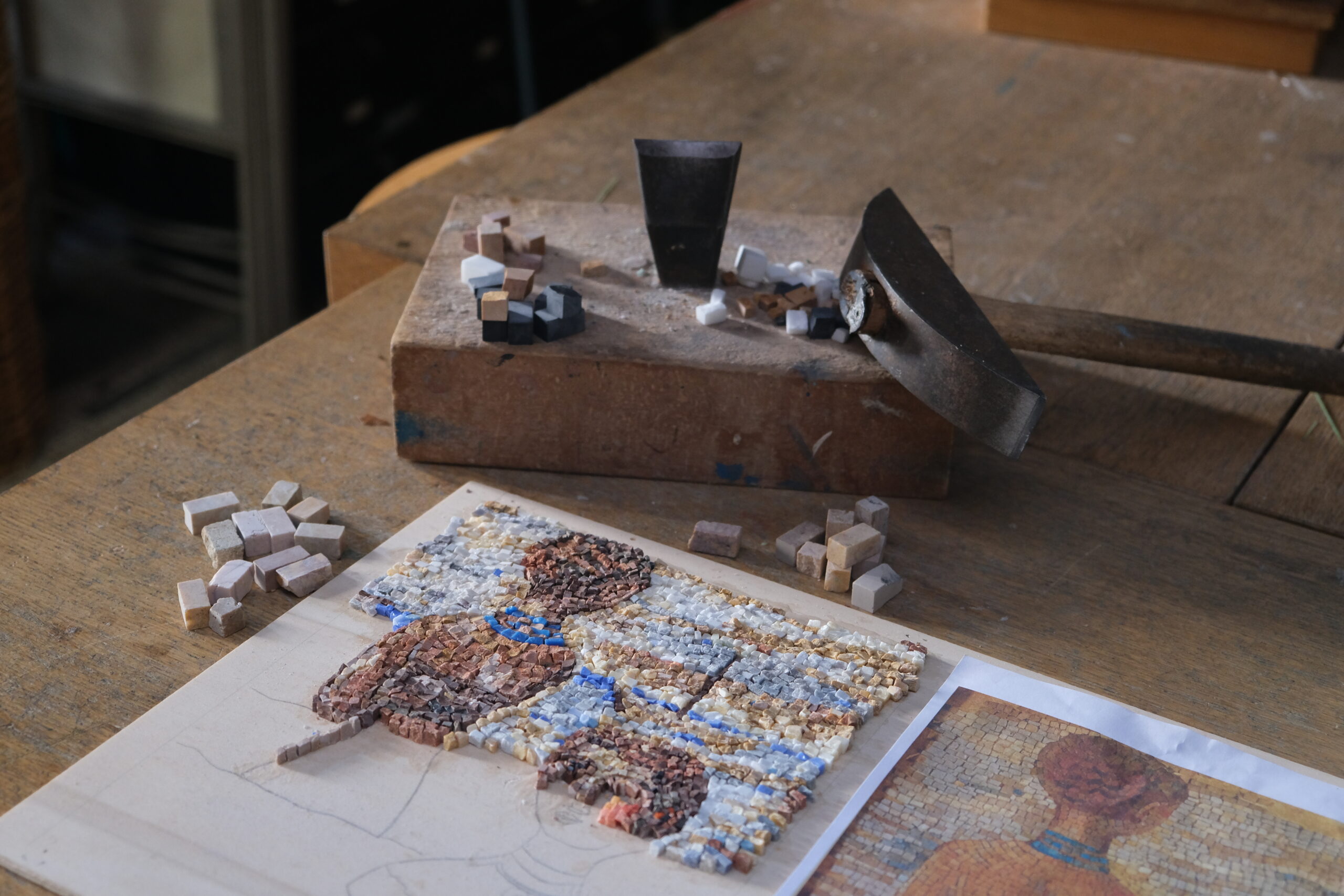
El arte de mosaico es una de las formas más antiguas y duraderas de expresión visual en la historia de la humanidad. Creados mediante el ensamblaje de pequeñas piezas de piedra, vidrio o cerámica conocidas como teselas, Los mosaicos han decorado espacios arquitectónicos durante miles de años. Desde las primeras civilizaciones hasta el diseño contemporáneo, el arte del mosaico refleja identidad cultural, creencias religiosas, y la innovación técnica en diferentes épocas.
Orígenes en el mundo antiguo
Los primeros ejemplos de mosaico datan de Mesopotamia en el III milenio a.C.29, donde los artesanos utilizaban piedras de colores y conchas prensadas en las superficies para crear motivos decorativos. La técnica evolucionó significativamente en Antigua Grecia, donde los artistas empezaron a colocar guijarros en composiciones detalladas que representaban mitología, La naturaleza y la vida cotidiana. Estas primeras obras sentaron las bases para desarrollos artísticos más complejos en civilizaciones posteriores.
La edad de oro romana
El arte del mosaico alcanzó niveles extraordinarios de sofisticación durante la época de los Imperio Romano. Los mosaicos decoraban villas, templos, casas de baños y edificios públicos, convirtiéndose en símbolos de la civilización. riqueza y prestigio. Ejemplos notables descubiertos en Pompeya revelan intrincados diseños geométricos y vívidas escenas narrativas. Los artistas romanos perfeccionaron el sombreado y la perspectiva, transformando los mosaicos en refinadas obras de arte.
Esplendor bizantino y medieval
Tras la caída de Roma, el mosaico floreció en el Imperio Bizantino, donde se asoció estrechamente con Arte cristiano. La ciudad de Ravenna conserva algunos de los más magníficos mosaicos bizantinos, caracterizados por fondos dorados y simbolismo espiritual. Obras maestras como las de Santa Sofía demostrar cómo se utilizaban los mosaicos para crear interiores luminosos que simbolizaban luz divina. Durante el periodo medieval, el mosaico también se desarrolló en las culturas islámicas, enfatizando motivos geométricos e intrincada decoración.
Decadencia renacentista y renacimiento moderno
Aunque el mosaico disminuyó durante el Renacimiento A medida que la pintura ganaba popularidad, nunca desapareció del todo. En los siglos XIX y XX, los artistas redescubrieron el mosaico como un poderoso medio de expresión. arte público y la decoración arquitectónica. En la actualidad, los mosaicos modernos incorporan materiales innovadores como el vidrio, la cerámica y elementos reciclados, mezclando técnicas antiguas con creatividad contemporánea.
Conclusión
La historia del arte del mosaico demuestra una extraordinaria continuidad de tradición artística. Desde la antigua Mesopotamia hasta el mundo moderno, pasando por la brillantez romana y bizantina, el mosaico se ha adaptado continuamente sin perder su carácter esencial. Su durabilidad y potencial expresivo garantizan que esta antigua forma de arte siga siendo relevante e inspiradora en la actualidad.
PREGUNTAS FRECUENTES
1. ¿Qué es el arte del mosaico?
El arte del mosaico es una técnica que utiliza pequeños trozos de materiales, llamados teselas, para crear imágenes o motivos decorativos.
2. ¿Cuándo comenzó el arte del mosaico?
Comenzó en Mesopotamia en torno al III milenio a.C.
3. ¿Por qué eran importantes los mosaicos en la sociedad romana?
Simbolizaban estatus y riqueza y decorado edificios privados y públicos.
4. ¿Qué distingue a los mosaicos bizantinos?
Son conocidos por fondos dorados, La cultura, los temas religiosos y el simbolismo espiritual.
5. ¿Se sigue utilizando el mosaico en la actualidad?
Sí, el mosaico sigue siendo popular en arquitectura, interiorismo y arte contemporáneo.


