
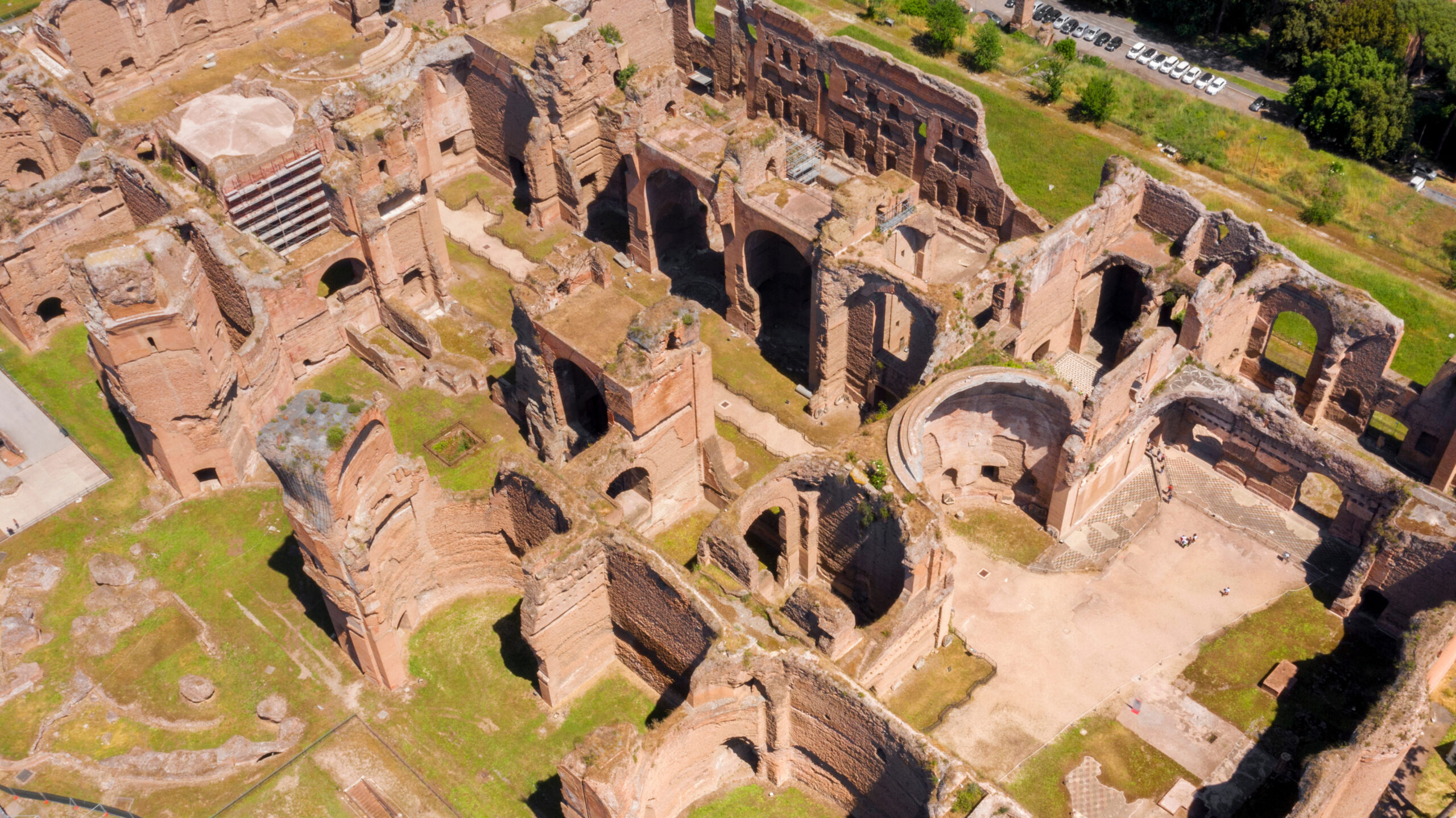
When visiting Rome, few ancient sites evoke the grandeur of the Roman Empire like the Baths of Caracalla. Built between 212 and 216 AD during the reign of Emperor Caracalla, this massive complex was not just a place to bathe but a symbol of imperial power and Roman engineering brilliance. Even today, the ruins speak volumes about the social and architectural importance of Roman public baths.
A Center of Roman Daily Life
The Baths of Caracalla served as a multifunctional complex, far beyond mere hygiene. Romans gathered here to relax, exercise, read, and socialize. The facility included hot baths (caldarium), warm baths (tepidarium), cold baths (frigidarium), and even a natatio, or open-air swimming pool. In addition, it featured gyms, libraries, and gardens, creating a hub of wellness and culture for up to 1,600 bathers at a time.
Engineering and Architectural Feat
The scale and sophistication of the engineering behind the Baths of Caracalla are extraordinary. The complex was supplied by a dedicated aqueduct and used a highly efficient heating system (hypocaust) to warm the floors and water. The interiors were decorated with mosaics, marble, and sculptures, reflecting the wealth and taste of the Roman elite. The surviving arches and vaults still impress visitors with their sheer size and strength.
The Legacy and Modern Use
Though the baths were abandoned after the 6th century due to damage and lack of water supply, their legacy lives on. Today, the Baths of Caracalla are a stunning example of ancient Roman leisure culture and are frequently used for open-air opera performances and concerts. Walking through the ruins, you can almost hear echoes of ancient voices and feel the timeless elegance of Roman design.
Planning Your Visit
The Baths of Caracalla are located just south of the Colosseum, and they are open to visitors year-round. It’s recommended to bring a guide or use an audio tour to fully appreciate the site’s history and details. Whether you’re a lover of history, architecture, or archaeology, this site offers a powerful glimpse into the daily life of ancient Rome—and a reminder of how advanced Roman society truly was.
FAQs about the Baths of Caracalla
1. How much does it cost to visit the Baths of Caracalla?
Tickets typically cost around €8–€12, with discounts for EU citizens under 25 and free entry for children under 18 and on certain special days. It’s best to check the official website or ticket platforms for current prices and combined passes.
2. How long should I plan to stay at the site?
Most visitors spend about 1 to 1.5 hours exploring the ruins, but history enthusiasts may want to stay longer to enjoy the details and optional guided tours.
3. Are the Baths of Caracalla accessible for people with disabilities?
Yes, the site has accessible pathways, and there are ramps for wheelchairs in most areas. It’s recommended to contact the site in advance to ensure a smooth experience.
4. Can I take photos inside the Baths?
Yes, photography is allowed, and the ruins offer many stunning photo opportunities. However, tripods and drones are typically not permitted without special permission.
5. Are the Baths of Caracalla open year-round?
Yes, the site is open throughout the year, though hours may vary by season and holidays. Summer months may include evening events, like opera performances, which offer a magical atmosphere in the historic setting.


