
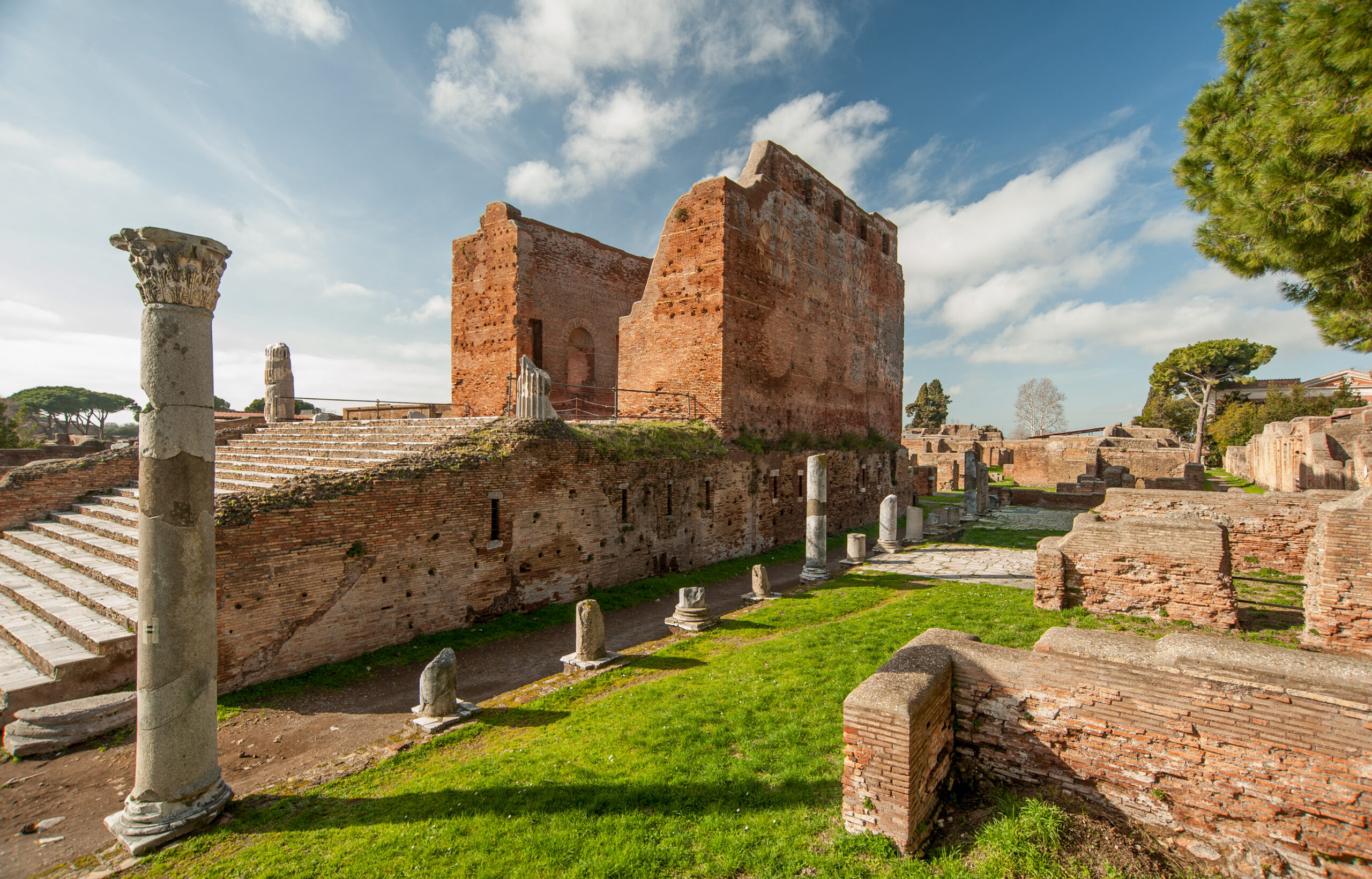
Rome is a city that overwhelms the senses—in the best possible way. There’s history in every stone, art around every corner, and the buzz of modern life intertwined with the echoes of an ancient empire. But sometimes, after navigating the crowds of the Colosseum or the Vatican, you start to crave a different kind of experience. One that lets you truly connect with the past, in silence.
That’s where Ostia Antica comes in. Just a short drive from the capital, this ancient harbor town is one of Italy’s best-kept secrets—a place where the past feels close enough to touch, and where you can explore at your own pace, guided by stories rather than selfie sticks.
👉 Ready to step back in time? Book your private Ostia Antica tour here
A Peaceful Departure from the Present
Your adventure begins not with a mad dash to a train or a chaotic group meeting point, but with something wonderfully simple: a private pick-up right from your hotel or apartment in Rome. You’re greeted by a professional driver and escorted to a clean, air-conditioned vehicle. The drive to Ostia Antica takes around 30–40 minutes, but it feels even shorter as the urban landscape slowly gives way to greener, quieter surroundings.
This is the kind of journey where you feel the pressure lift before the tour even begins. No maps, no confusion—just the pleasant anticipation of discovering something truly special.
Welcome to a City Frozen in Time
Upon arrival at Ostia Antica, you’ll meet your licensed private guide, someone who knows not only the layout of the ruins, but the rhythms of life that once pulsed through them. As you pass through the gates of the archaeological park, it becomes immediately clear: this isn’t just another tourist stop. It’s an ancient city that still breathes.
You’ll begin your walk along the Decumanus Maximus, the main road of the old Roman port. Once a bustling thoroughfare lined with shops and homes, it now offers a wide, peaceful path through time. To your left and right, you’ll see communal baths adorned with mosaic floors, temples standing stoically in the sun, and the remnants of apartment buildings that once housed merchants and laborers.
It’s not hard to imagine what life was like here. Children playing in the streets, bakers firing up their ovens, sailors returning from distant lands, crowds gathering at the local theater. And thanks to your guide’s storytelling, these ruins become more than stone—they become scenes from a living city.
The Beauty of the Everyday
One of the most striking things about Ostia Antica is how ordinary life is preserved here. In Pompeii, you get the drama of disaster. In Rome, you get monuments of empire. But in Ostia Antica, you get something different: a look at how people lived on a daily basis.
You’ll visit a Roman bakery, where the oven is still visible. You’ll sit in the seats of an amphitheater that could hold 4,000 people. You’ll see the remains of public toilets—yes, even those were communal—and apothecaries, workshops, and taverns that served locals and travelers alike.
There’s even a strong sense of humor in some of the ancient graffiti and signage. Romans, it turns out, weren’t all that different from us—they joked, they gossiped, they made fun of their neighbors. This human side of history is often missing from the grand monuments, but it’s everywhere in Ostia.
A Space to Breathe and Imagine
Perhaps the greatest gift of this tour is space—physical and mental. Because Ostia Antica is lesser known, you won’t be jostling through crowds or competing for photo angles. You’ll have time to pause, reflect, ask questions. You’ll be able to appreciate the scent of pine trees, the sound of your footsteps on ancient stone, the sheer beauty of ruins softened by nature.
It’s not just a tour—it’s an invitation to imagine. What did it smell like here in the morning? What did a Roman mother say to her child before school? What kind of conversations echoed through the forum at dusk?
Your guide doesn’t just recite facts—they encourage you to see the world through ancient eyes.
Back to Rome, Changed
After around four hours of exploration, you’ll meet your driver again and return to Rome. But you won’t come back the same. You’ll have touched a different side of history—not just the emperors and gladiators, but the bakers, children, shopkeepers, and sailors who made Rome real.
And you’ll carry that with you, perhaps with a few incredible photos and many more quiet, unforgettable impressions.
Is Ostia Antica Right for You?
If you love the idea of stepping off the beaten path, of learning not just what Rome built but how Romans lived, then this tour is for you. It’s for curious travelers, thoughtful wanderers, and anyone who prefers ruins with room to breathe.
👉 Learn more or book your private experience here: https://artandtraditiontours.com/en/tour/ostia-antica-private-tour-from-rome-discover-the-ancient-harbor-of-rome/
Frequently Asked Questions
1. Is Ostia Antica really less crowded than other Roman sites?
Yes, absolutely. It’s one of the best-kept secrets in the region. Most tourists stick to central Rome or Pompeii, which means you often have long stretches of this ancient city almost entirely to yourself.
2. Is the tour suitable for families or older travelers?
Definitely. The pace is relaxed, and the storytelling is engaging for all ages. Just be sure to wear comfortable shoes, as the ancient roads can be uneven.
3. Can I take photos inside the site?
Of course! In fact, Ostia Antica is a dream for photographers—natural light, open spaces, and stunning ruins make for truly memorable shots.
4. What if I’ve already seen the Colosseum and Roman Forum?
Then this tour is the perfect complement. While the Colosseum shows imperial grandeur, Ostia shows daily life. It’s more intimate, more complete in many ways—and a welcome break from the busy city.
5. Is the guide with us the whole time?
Yes! Your private guide stays with you throughout the entire visit, offering insight, answering questions, and tailoring the experience to your interests.


