
Introduction
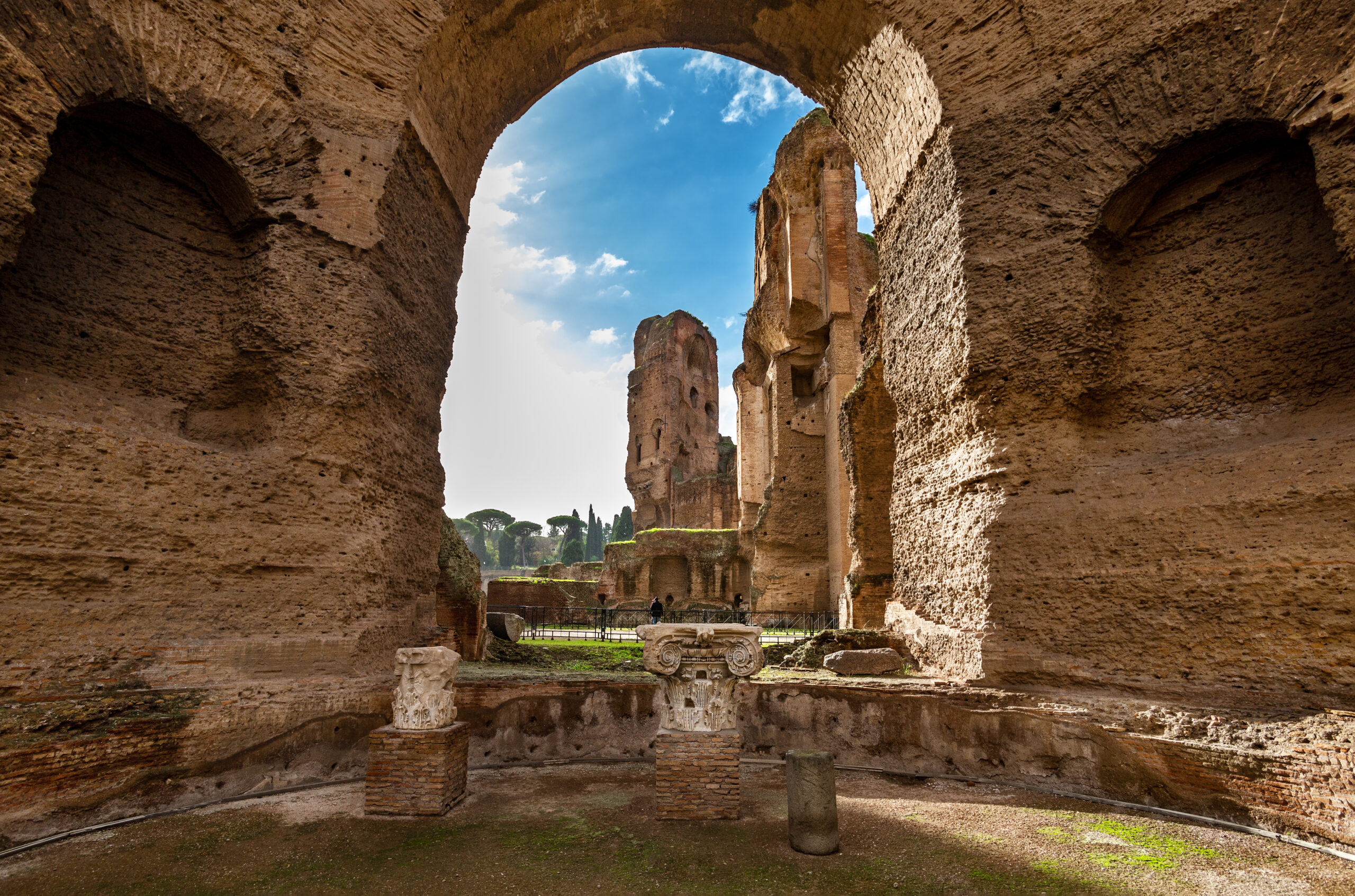
The Baths of Caracalla are one of the most impressive and well-preserved examples of ancient Roman architecture. Located in the heart of Rome, these monumental thermal baths reflect the power, engineering brilliance, and social culture of the Roman Empire. Built in the 3rd century AD, they were not just a place for bathing, but a vibrant center of daily life, relaxation, and community gatherings.
The History Behind the Baths
Commissioned by Emperor Caracalla and completed in 216 AD, the Baths of Caracalla were designed to showcase the strength and prosperity of the Empire. They could accommodate up to 1,600 visitors at a time, making them one of the largest bathing complexes ever built. The baths remained in use until the 6th century, when the fall of the Roman aqueducts led to their abandonment.
Architectural and Engineering Marvel
The complex covered approximately 25 hectares and featured an extraordinary combination of vaulted ceilings, massive columns, and intricate mosaics. The heating system, known as the hypocaust, allowed hot air to circulate beneath the floors, creating warm rooms such as the caldarium (hot bath), tepidarium (warm bath), and frigidarium (cold bath). This advanced system highlights the remarkable technological innovation of Roman engineers.
More Than Just Baths
The Baths of Caracalla were much more than a spa. They included gyms, gardens, libraries, and even spaces for social and cultural events. For Roman citizens, visiting the baths was part of everyday life — a place to exercise, discuss politics, and relax. Today, the site also hosts concerts and performances, continuing its tradition as a cultural venue in modern Rome.
Art and Decoration
The baths were richly decorated with marble sculptures, colorful mosaics, and precious stones. Many artworks discovered at the site are now preserved in museums such as the Vatican Museums and the Museo Archeologico Nazionale di Napoli. These decorations demonstrate the Empire’s wealth and its deep appreciation for art and aesthetics.
Visiting the Baths Today
Today, the Baths of Caracalla remain one of Rome’s most fascinating archaeological sites. Visitors can walk among the towering ruins and imagine the former glory of this grand complex. The site offers a unique opportunity to experience the scale, beauty, and historical significance of ancient Roman civilization firsthand.
Conclusion
The Baths of Caracalla stand as a powerful symbol of Roman engineering, architectural mastery, and social life. More than just baths, they were a center of community, culture, and innovation. Visiting them today allows us to step back in time and appreciate the enduring legacy of the Roman Empire.
FAQ – Baths of Caracalla
1. When were the Baths of Caracalla built?
They were completed in 216 AD during the reign of Emperor Caracalla.
2. Where are the Baths of Caracalla located?
They are located in Rome, Italy, near the Appian Way.
3. What was the purpose of the baths?
They were used for bathing, exercise, and social gatherings.
4. How many people could the baths accommodate?
They could host approximately 1,600 visitors at the same time.
5. Can you visit the Baths of Caracalla today?
Yes, the site is open to the public and also hosts cultural events and concerts.


