
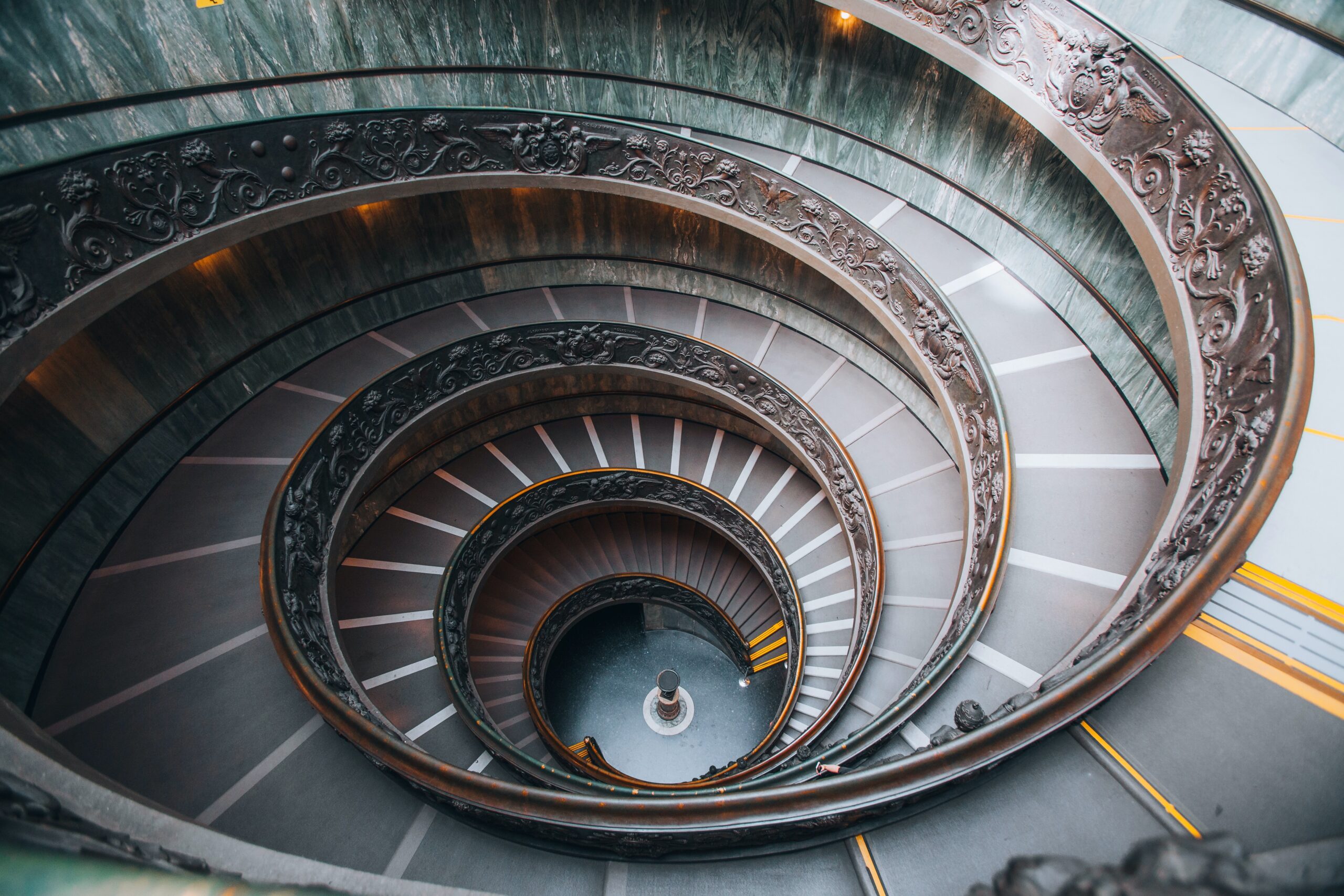
Tucked away within the Vatican Museums, the Bramante Staircase is a captivating blend of architectural genius and historical intrigue. This spiral ramp represents one of the finest examples of Renaissance and modern design working in harmony. What makes the staircase truly special is that there are actually two “Bramante Staircases” — one designed by Donato Bramante in 1505, and a modern version designed by Giuseppe Momo in 1932.
The Original Staircase by Donato Bramante
Commissioned by Pope Julius II, the original Bramante Staircase was built in the early 16th century to connect the Belvedere Palace with the outside world. Its unique double-helix design allowed people and animals — such as horses or mules carrying goods — to ascend and descend without crossing paths. Although not typically open to the public, the original staircase still stands as a quiet testament to the ingenuity of Renaissance architecture.
Giuseppe Momo’s 1932 Staircase
The more famous and accessible version of the Bramante Staircase is actually the modern reinterpretation by Giuseppe Momo. Constructed in 1932, this spiral ramp serves as the grand exit of the Vatican Museums. Just like Bramante’s design, Momo’s staircase features a double helix that allows for smooth two-way traffic. Its sweeping curves, intricate iron balustrades, and the play of light from the overhead glass dome make it one of the most photographed spots in the entire museum.
Symbolism and Functionality
Beyond its aesthetic beauty, the staircase holds deep symbolic meaning. The spiral has long been associated with infinity and the journey of the soul — a fitting metaphor within the spiritual and artistic setting of the Vatican. At the same time, its practical use as a crowd-management tool proves that beauty and functionality can go hand in hand. Momo’s version cleverly channels the flow of thousands of visitors without causing bottlenecks.
A Must-See Architectural Gem
Whether you are an architecture enthusiast, a history buff, or a casual tourist, the Bramante Staircase offers something unique and unforgettable. It stands as a reminder that even in a place overflowing with masterpieces, hidden gems await those who take a moment to look deeper. So next time you find yourself in the Vatican Museums, take a moment to appreciate this architectural spiral — a true marvel of both past and present.
Frequently Asked Questions (FAQs)
1. Is the original Bramante Staircase open to the public?
No, the original staircase designed by Donato Bramante in the 16th century is not usually open to the public. It is located in a restricted area of the Vatican and can only be visited on special tours or with special permission.
2. Where is the modern Bramante Staircase located?
The modern Bramante Staircase, designed by Giuseppe Momo in 1932, is located at the exit of the Vatican Museums. All visitors pass through it at the end of their museum tour, making it a popular photo spot.
3. Why is the staircase called “double helix”?
The staircase is called a double helix because it consists of two spiral ramps that wind around each other. This allows people to go up and down simultaneously without crossing paths — a design that is both practical and visually stunning.
4. Can I take photos of the Bramante Staircase?
Yes, photography is allowed on the modern staircase at the Vatican Museums. In fact, it’s one of the most photographed architectural features of the museum. Just be mindful of other visitors and avoid using flash if possible.
5. What is the symbolic meaning of the spiral design?
The spiral is a powerful symbol often associated with infinity, growth, and the journey of the soul. In the context of the Vatican, it reflects themes of spiritual ascent, continuity, and the connection between the earthly and the divine.


