
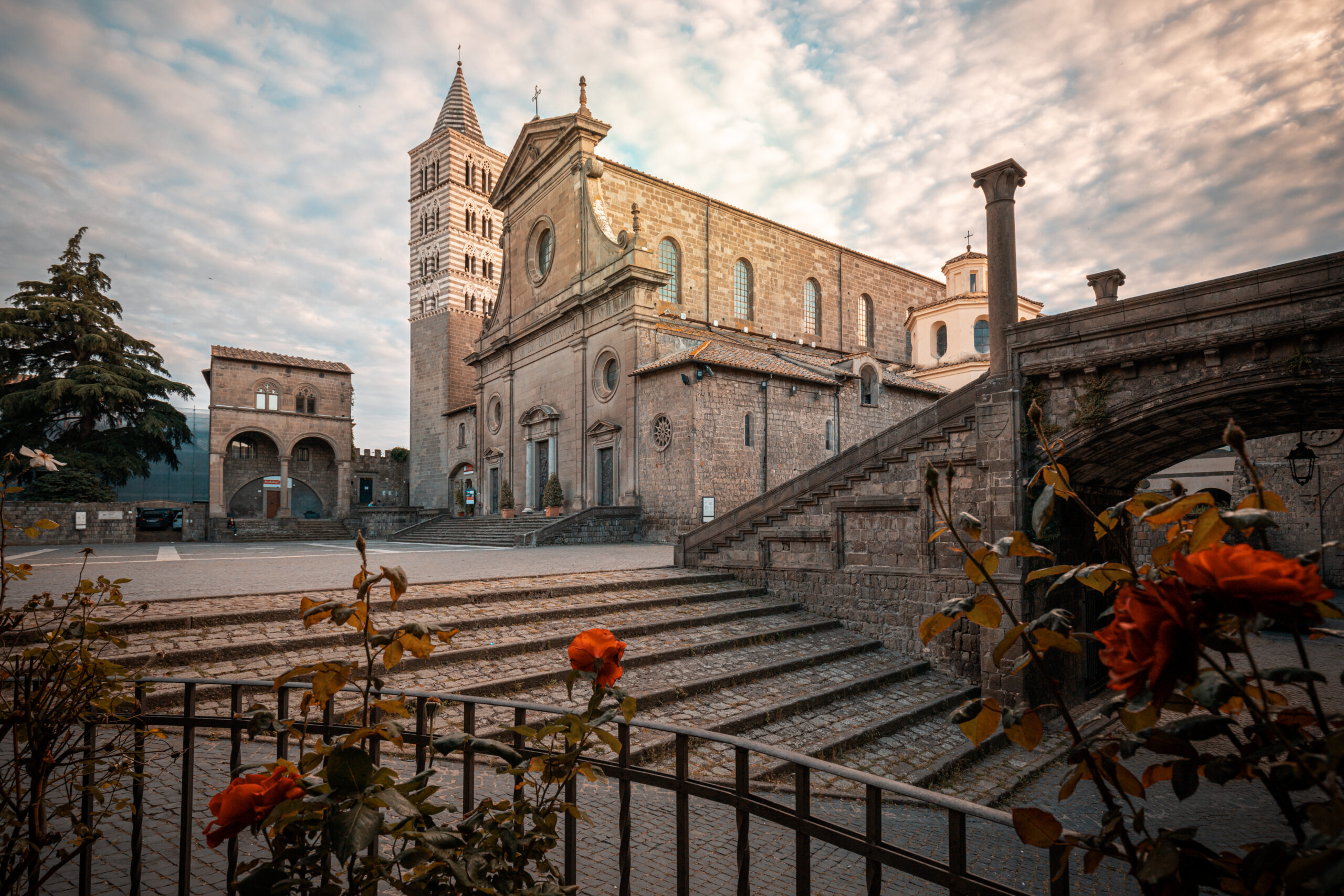
The Tuscia region is a land rich in history, traditions, and timeless landscapes, where medieval towns and Renaissance masterpieces coexist in perfect harmony. Located in northern Lazio, this area is known for its authentic atmosphere, rolling hills, and historic villages that preserve centuries of cultural heritage.
The Palace of the Popes: Symbol of Papal Power
One of the most important landmarks in Tuscia is the Palace of the Popes in Viterbo, a powerful symbol of papal history. Built in the 13th century, it hosted several popes and early conclaves, marking Viterbo as a central political and religious city in medieval Italy.
Viterbo and Its Medieval Heart
The city of Viterbo itself is a remarkable example of medieval architecture. Walking through its historic center, especially the San Pellegrino district, visitors discover stone towers, ancient fountains, and narrow streets that tell stories of noble families and daily life in the Middle Ages.
Palazzo Farnese in Caprarola: A Renaissance Masterpiece
In the heart of Caprarola stands the magnificent Palazzo Farnese, one of the finest examples of Renaissance architecture in Italy. Commissioned by the powerful Farnese family, the palace is famous for its unique pentagonal shape, monumental staircases, and richly decorated rooms.
Italian Gardens and the Soul of Tuscia
Completing the experience are the elegant Italian gardens of Palazzo Farnese, with fountains, terraces, and panoramic views over the Tuscia countryside. Together, Viterbo and Caprarola reveal the authentic spirit of Tuscia, where art, history, and landscape blend seamlessly.
Check out our tour of Viterbo and Caprarola if you want to explore these beautiful and historical lands:
FAQs
1. Where is Tuscia located?
Tuscia is located in northern Lazio, between Rome, Umbria, and Tuscany, and is known for its historic towns and natural landscapes.
2. Why is the Palace of the Popes in Viterbo important?
The Palace of the Popes is a key site of medieval papal history, as it hosted popes and early conclaves during the 13th century.
3. What can visitors see in Viterbo?
In Viterbo, visitors can explore the medieval historic center, the San Pellegrino district, ancient fountains, and significant religious buildings.
4. What makes Palazzo Farnese in Caprarola special?
Palazzo Farnese stands out for its pentagonal design, spectacular Renaissance frescoes, and its role as a symbol of Farnese family power.
5. Are the gardens of Palazzo Farnese open to the public?
Yes, the Italian gardens of Palazzo Farnese are open to visitors and offer fountains, terraces, and scenic views of the Tuscia countryside.


