
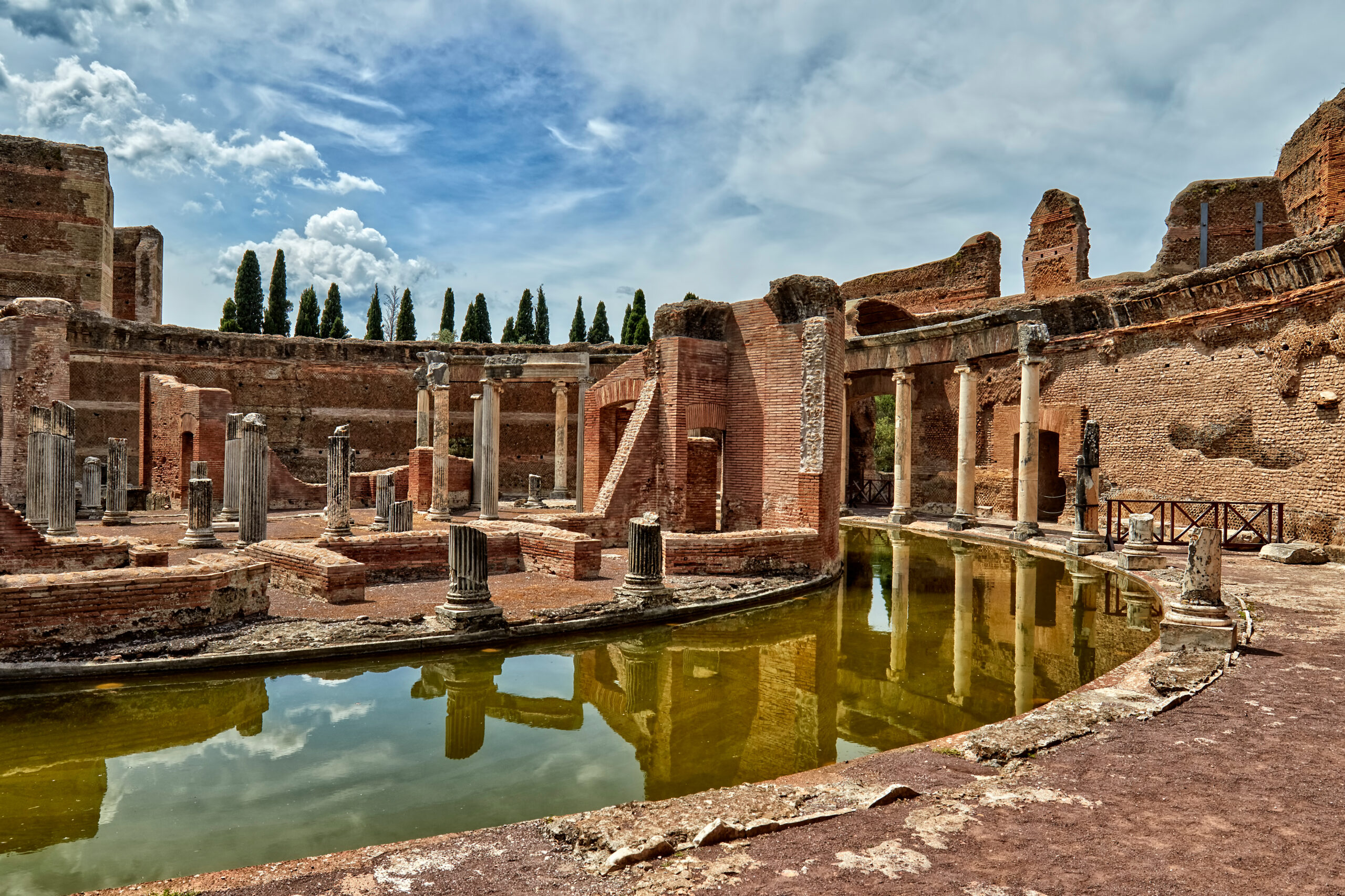
Just outside of Rome, in the charming town of Tivoli, lies one of the most impressive archaeological sites in Italy — Villa Adriana. Built in the 2nd century AD by Emperor Hadrian, this vast imperial complex was more than just a villa; it was a miniature city and a retreat from the bustle of Roman political life. Today, it stands as a UNESCO World Heritage Site, drawing history lovers, architects, and tourists from all over the world.
A Fusion of Cultures and Styles
Villa Adriana covers over 250 acres, blending Roman architecture with influences from Greek and Egyptian styles. The emperor, known for his love of travel, incorporated the best elements of the cultures he encountered into the villa’s design. Structures like the Maritime Theatre, the Canopus, and the Philosopher’s Hall showcase this unique architectural fusion and reveal Hadrian’s refined taste and intellectual curiosity.
Walking Through Ancient Grandeur
Walking through the ruins today, one can still sense the villa’s grandeur. The Maritime Theatre, for example, is a circular island surrounded by a moat, once used as a private retreat. The Canopus, with its long reflecting pool flanked by colonnades and statues, is inspired by an Egyptian canal. These carefully constructed spaces were designed not only for function and beauty but also for contemplation and philosophical discussion.
Ingenious Roman Engineering
The villa also highlights the advanced engineering of the Roman Empire. Hidden beneath the complex is an extensive network of underground tunnels used by servants and workers, allowing them to move unseen. The villa had its own baths, libraries, temples, and gardens, making it a fully self-sufficient estate that rivaled even the most sophisticated cities of its time.
A Timeless Destination
Today, Villa Adriana remains one of the most significant symbols of Roman imperial power and creativity. Whether you’re a fan of ancient history, architecture, or simply looking for a beautiful day trip from Rome, a visit to Tivoli’s most famous site is a journey into the heart of classical civilization. Don’t miss the chance to explore this remarkable testament to Roman ingenuity and cultural fusion.
Frequently Asked Questions
1. How do I get to Villa Adriana from Rome?
You can reach Villa Adriana from Rome by taking a regional train to Tivoli (about 1 hour), then a local bus or taxi to the villa. Alternatively, some tour companies offer direct transfers or guided day trips.
2. What are the opening hours and ticket prices?
Villa Adriana is usually open daily, with hours that vary by season (typically from 8:30 AM to around 7:00 PM in summer). Tickets cost around €10 for adults, with discounts for EU citizens under 25 and free entry for children under 18. Always check the official website for up-to-date information.
3. How long does it take to visit Villa Adriana?
To fully explore the site, including its main landmarks like the Canopus and Maritime Theatre, plan to spend at least 2 to 3 hours. History enthusiasts may want even more time to appreciate the ruins and their historical context.
4. Is Villa Adriana accessible for people with mobility issues?
The site is partially accessible. Some paths are uneven due to the ancient ruins, but there are designated routes for visitors with reduced mobility. It’s recommended to contact the site in advance for specific access details or assistance.
5. What other attractions can I visit in Tivoli?
In addition to Villa Adriana, Tivoli is home to two other famous sites: Villa d’Este, known for its spectacular fountains and Renaissance gardens, and Villa Gregoriana, a lush park with waterfalls and ancient temples. All three make Tivoli a perfect cultural and scenic day trip from Rome.


