
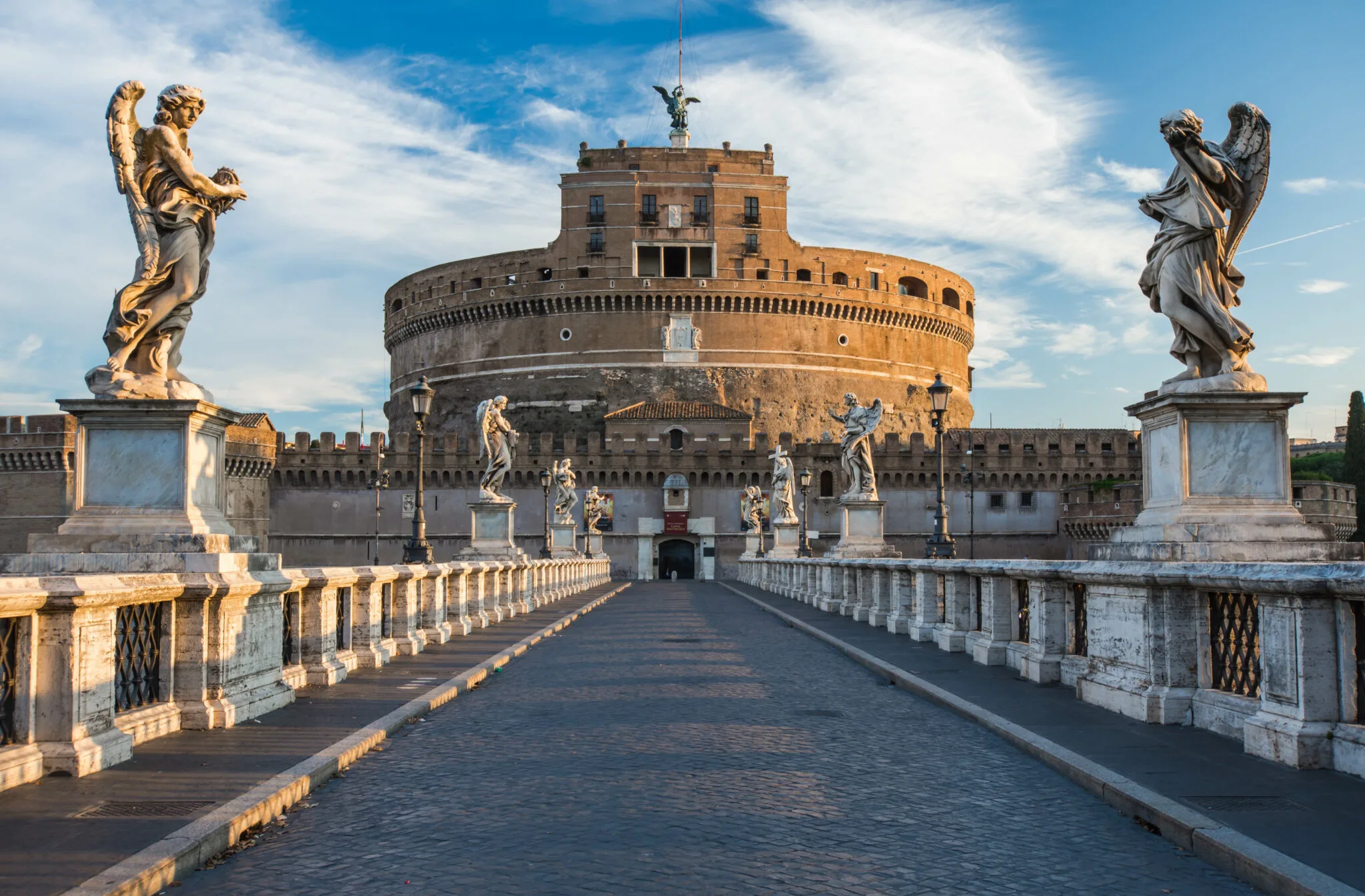
An Ancient Monument in the Heart of Rome
Castel Sant’Angelo is one of the most iconic landmarks in Rome, located along the banks of the Tiber River. Originally built as a grand tomb, it has witnessed centuries of transformation, making it a symbol of the city’s layered history. Today, it stands as a powerful reminder of ancient Rome, medieval fortifications, and Renaissance influence.
The Vision of Emperor Hadrian
Constructed in 135 AD under Emperor Hadrian, the structure was initially intended as a mausoleum for the emperor and his family. Known as the Mausoleum of Hadrian, it was designed to showcase imperial power and legacy. Over time, its role evolved, but its monumental core still reflects the ambition of the Roman Empire.
From Tomb to Fortress
During the Middle Ages, Castel Sant’Angelo was converted into a fortress and integrated into the city’s defensive walls. Its strategic position made it a crucial stronghold, especially during times of siege. The castle also became a papal refuge, connected to Vatican City by the secret passage known as the Passetto di Borgo.
Legend of the Archangel Michael
The castle’s current name comes from a legendary event in 590 AD, when Archangel Michael was said to appear atop the building, signaling the end of a devastating plague. A statue of the angel now crowns the fortress, symbolizing protection and divine intervention, adding a spiritual dimension to this historic site.
A Museum with a View
Today, Castel Sant’Angelo is a popular museum that offers visitors a journey through history, with exhibits ranging from ancient artifacts to papal apartments. Its terrace provides breathtaking panoramic views of Rome, including St. Peter’s Basilica and the surrounding cityscape, making it a must-see destination for travelers.
Frequently Asked Questions about Castel Sant’Angelo
1. What is Castel Sant’Angelo?
Castel Sant’Angelo is a historic fortress in Rome, originally built as a mausoleum for Emperor Hadrian and later used as a papal residence and military stronghold.
2. Why is it called Castel Sant’Angelo?
The name comes from the legend of Archangel Michael, who appeared on top of the castle to signal the end of a plague in 590 AD.
3. What is the Passetto di Borgo?
The Passetto di Borgo is a secret elevated passage connecting Castel Sant’Angelo to Vatican City, used by popes as an escape route during danger.
4. Can you visit Castel Sant’Angelo today?
Yes, it is now a museum open to the public, offering historical exhibits and panoramic views of Rome.
5. What can you see from the top of the castle?
From the terrace, visitors can enjoy stunning views of St. Peter’s Basilica, the Tiber River, and the skyline of Rome.


