
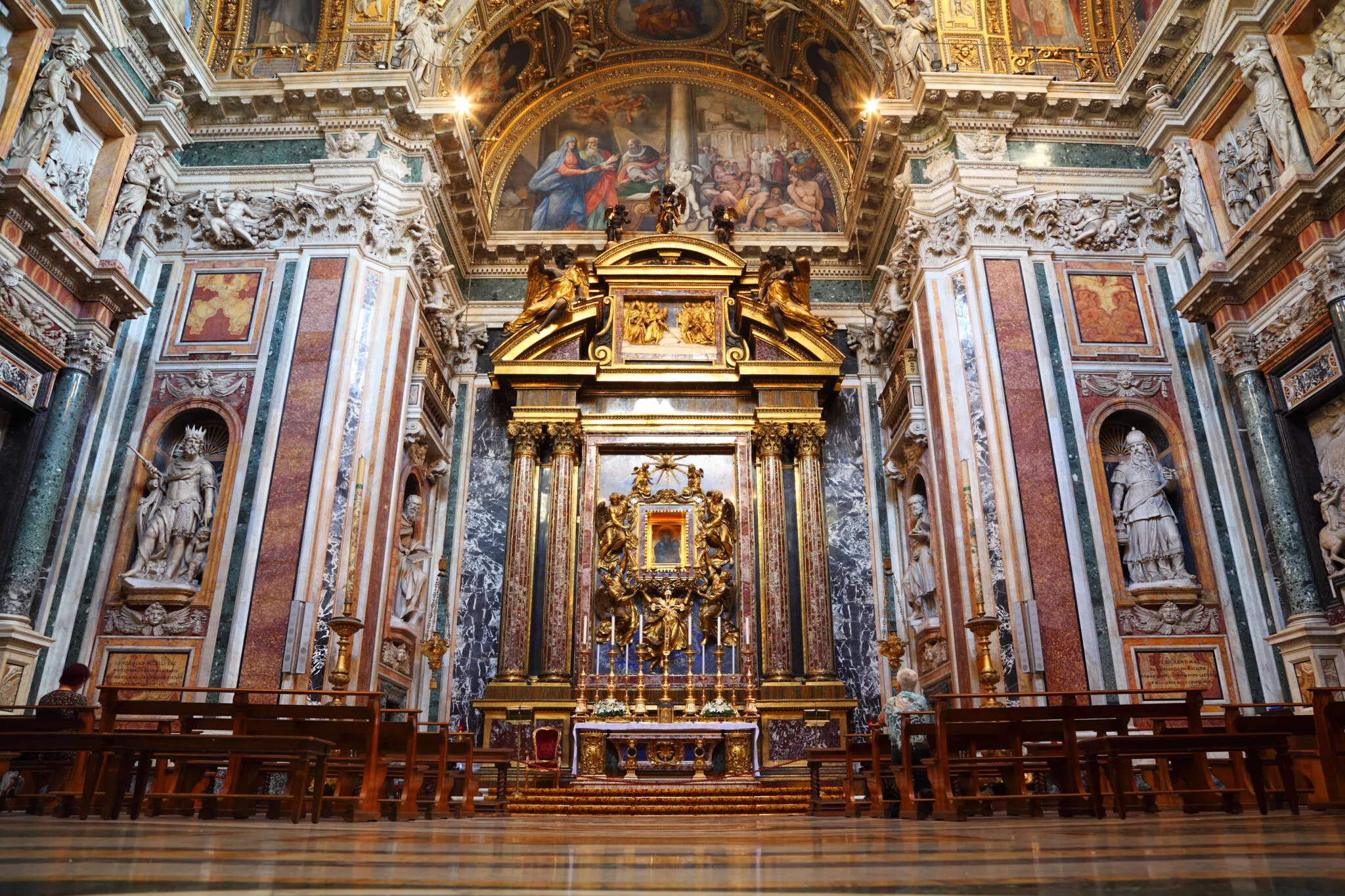
A Timeless Masterpiece in Rome
The Basilica of Santa Maria Maggiore is one of the most important churches in Rome, renowned for its rich history, stunning architecture, and deep religious significance. Located on the Esquiline Hill, it stands as one of the four major papal basilicas, attracting visitors from all over the world. Its origins date back to the 5th century, making it a true symbol of early Christian art and devotion.
The Legend Behind Its Foundation
According to tradition, the foundation of Santa Maria Maggiore is linked to a miraculous event known as the “Miracle of the Snow.” In the summer of 358 AD, the Virgin Mary is said to have appeared in a dream, indicating the location where a church should be built. Remarkably, snow fell on that very spot in August, guiding the construction. This story remains a key part of the basilica’s spiritual identity and continues to inspire believers.
Artistic Treasures and Mosaics
Inside the basilica, visitors can admire breathtaking mosaics, some of the oldest in Rome, dating back to the 5th century. These masterpieces depict scenes from the Old Testament and highlight the importance of biblical storytelling in early Christianity. The intricate details and vibrant colors showcase the skill of ancient artists and contribute to the basilica’s reputation as a treasure trove of sacred art.
Architectural Grandeur Through the Centuries
Over the centuries, Santa Maria Maggiore has undergone several renovations, blending different architectural styles such as Romanesque, Renaissance, and Baroque. Its impressive façade, grand interior, and coffered ceiling—said to be gilded with the first gold brought from the Americas—reflect the evolving tastes and influences of different historical periods. This fusion of styles makes the basilica a unique example of architectural evolution.
A Living Place of Worship and Culture
Today, the basilica remains an active place of worship and a major destination for pilgrims and tourists alike. Important religious celebrations are still held here, preserving its role as a center of Catholic tradition. At the same time, its cultural and artistic significance makes it a must-see landmark for anyone visiting Rome, offering a profound glimpse into the city’s enduring heritage.


