
Discovery of a Masterpiece
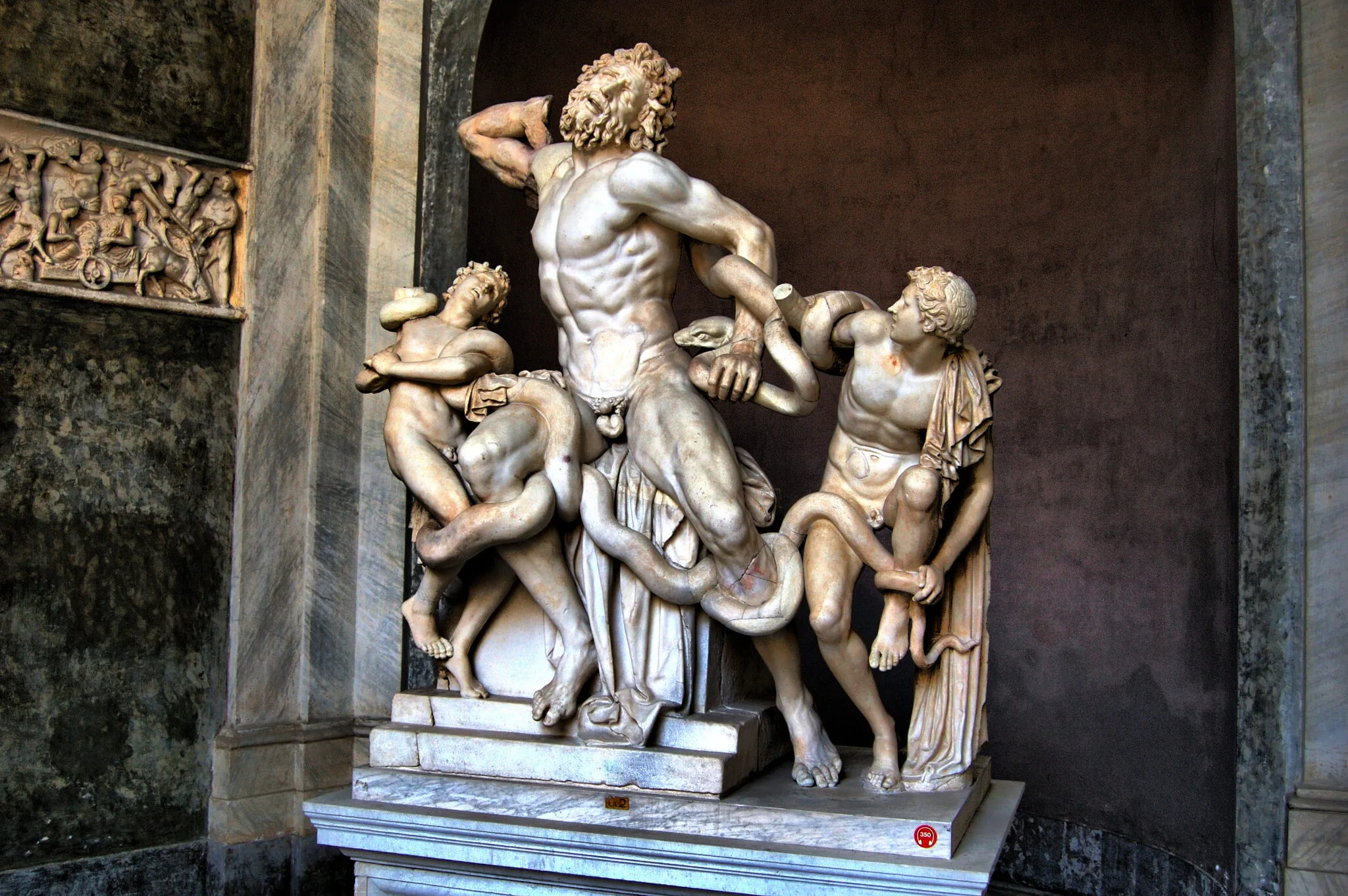
The Laocoön and His Sons is one of the most celebrated sculptures of ancient art, discovered in 1506 in Rome and now housed in the Vatican Museums. This extraordinary marble group immediately captured the attention of Renaissance artists and scholars, who recognized its dramatic power and technical brilliance. Its discovery marked a turning point in the appreciation of classical antiquity, influencing generations of sculptors and painters.
The Myth Behind the Sculpture
The statue illustrates the tragic story of Laocoön, a Trojan priest who warned his people against accepting the deceptive Trojan Horse. According to myth, the gods punished him for his defiance by sending sea serpents to kill him and his two sons. The sculpture captures this moment of intense struggle, embodying themes of fate, punishment, and human suffering that were central to ancient storytelling.
Artistic Features and Style
What makes the Laocoön group so remarkable is its dynamic composition and emotional intensity. The intertwined bodies and twisting forms create a sense of movement and tension, showcasing the mastery of Hellenistic sculpture. The detailed anatomy and expressive faces highlight the artists’ deep understanding of the human body and emotional expression, making the work a pinnacle of classical craftsmanship.
Influence on Renaissance Art
After its discovery, the Laocoön became a major source of inspiration for Renaissance masters such as Michelangelo. Its dramatic poses and muscular forms contributed to the development of Renaissance aesthetics, particularly in the study of the human figure. Artists admired its balance between ideal beauty and raw emotion, which helped shape the evolution of Western art.
A Lasting Cultural Icon
Today, the Laocoön remains a powerful symbol of artistic excellence and human drama. Visitors to the Vatican Museums continue to be captivated by its intensity and historical significance. As a masterpiece of ancient sculpture, it bridges the gap between past and present, reminding us of the enduring power of mythology, art, and human expression.
Frequently Asked Questions about the Laocoön Statue
1. What does the Laocoön statue represent?
The sculpture depicts the tragic fate of Laocoön and his sons, attacked by sea serpents as punishment from the gods. It symbolizes themes such as fate, divine intervention, and human suffering.
2. Where is the Laocoön statue located?
The statue is displayed in the Vatican Museums in Rome, one of the most important collections of ancient art in the world.
3. When was the Laocoön statue discovered?
It was discovered in 1506 in Rome, an event that greatly influenced the revival of classical antiquity during the Renaissance.
4. Who created the Laocoön sculpture?
The work is traditionally attributed to three Greek sculptors: Agesander, Athenodoros, and Polydorus of Rhodes, masters of Hellenistic sculpture.
5. Why is the Laocoön statue so important?
It is considered a masterpiece because of its dramatic composition, detailed anatomy, and emotional intensity, making it a key example of classical craftsmanship and a major influence on Western art.


