
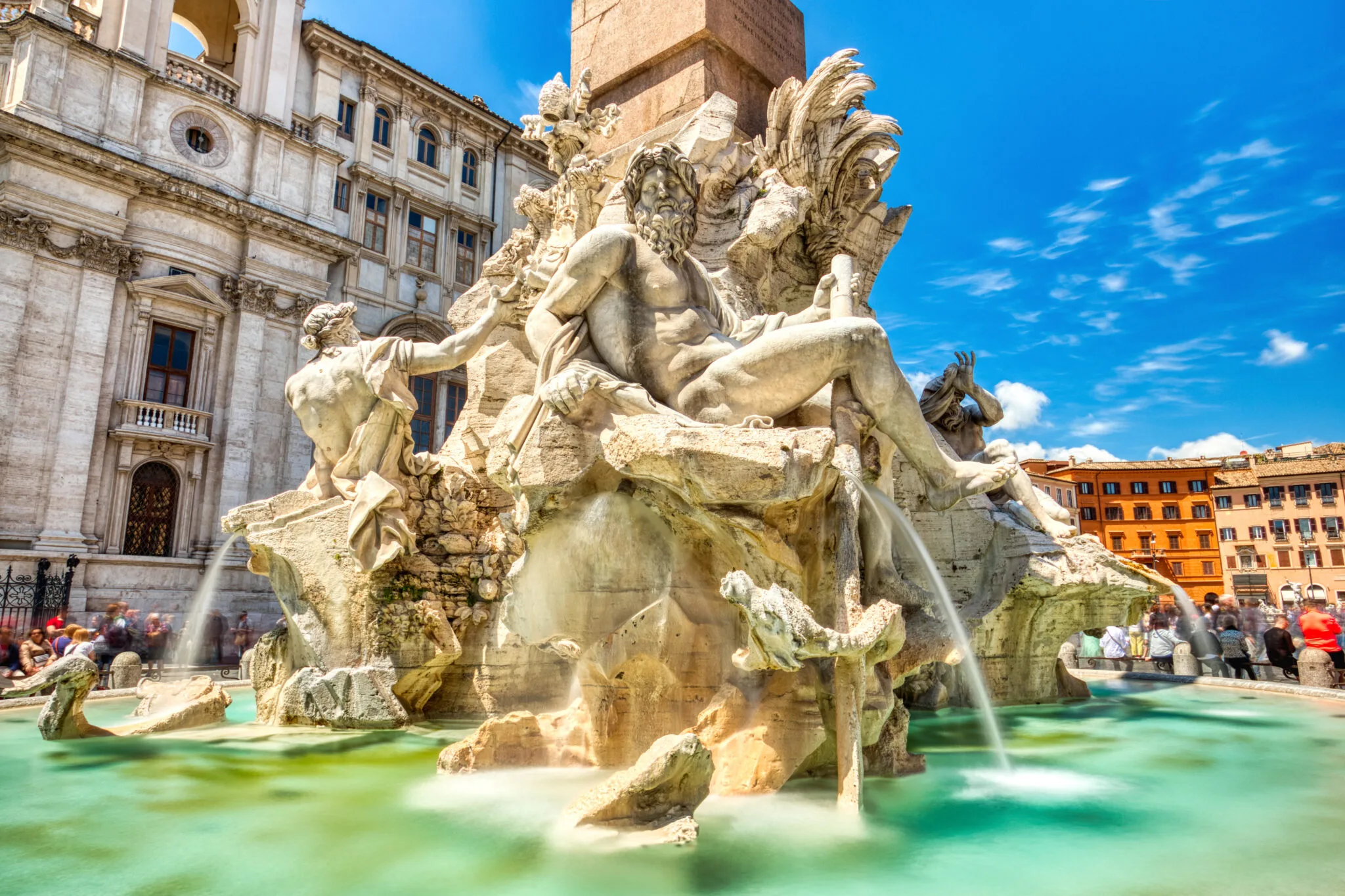
A Baroque Icon in the Heart of Rome
The Fountain of the Four Rivers stands proudly in the center of Piazza Navona, one of the most vibrant squares in Rome. Designed during the height of the Baroque period, this stunning monument captures the artistic ambition and grandeur of 17th-century Italy. Surrounded by lively cafés and historic architecture, the fountain remains a focal point for visitors seeking both beauty and history.
The Genius of Gian Lorenzo Bernini
Commissioned by Pope Innocent X, the fountain was created by the legendary sculptor Gian Lorenzo Bernini in 1651. Bernini’s design reflects his mastery of movement, emotion, and theatrical composition. The structure is not just a fountain, but a dynamic piece of sculptural storytelling, showcasing his ability to blend architecture, water, and symbolism into a unified work of art.
Symbolism of the Four Great Rivers
At the base of the fountain are four magnificent figures representing the major rivers of four continents known at the time: the Danube (Europe), the Nile (Africa), the Ganges (Asia), and the Rio de la Plata (Americas). Each river god is carved with unique details that symbolize the characteristics and mysteries of their respective regions. The covered face of the Nile, for example, represents the river’s unknown source during that era.
The Obelisk and Architectural Harmony
Rising dramatically from the center of the fountain is an ancient Egyptian obelisk, which adds vertical grandeur and historical depth. This obelisk, originally from the Circus of Maxentius, is crowned with a symbol of the Pamphili family, linking the monument to its patron. The interplay between the flowing water, rugged rocks, and towering obelisk creates a harmonious balance of movement and stability.
A Living Landmark Today
Today, the Fountain of the Four Rivers continues to enchant tourists and locals alike. It serves not only as a historical monument but also as a vibrant meeting point in Piazza Navona. Street artists, musicians, and visitors gather around it daily, making it a living symbol of Rome’s cultural energy. Whether admired by day or illuminated at night, the fountain remains an unforgettable testament to Baroque artistry and timeless beauty.
Frequently Asked Questions about The Fountain of the Four Rivers
1. What is the Fountain of the Four Rivers?
The Fountain of the Four Rivers is a famous Baroque fountain located in Piazza Navona in Rome, designed by Gian Lorenzo Bernini in 1651. It represents four major rivers from different continents.
2. Which rivers are represented in the fountain?
The fountain symbolizes the Danube, Nile, Ganges, and Rio de la Plata, each representing Europe, Africa, Asia, and the Americas respectively.
3. Why is the Nile statue’s face covered?
The face of the Nile is covered to symbolize the mystery of its source, which was unknown at the time the fountain was created.
4. Who commissioned the fountain?
The fountain was commissioned by Pope Innocent X, a member of the Pamphili family, to decorate Piazza Navona.
5. Why is the Fountain of the Four Rivers important?
It is considered a masterpiece of Baroque art and architecture, showcasing Bernini’s genius and representing the global reach of the Catholic Church during the 17th century.


